Vector Parthenon Glyph Icon: Premium Graphics & Icons for Brand Clarity
First Impression: Timeless Authority, Not Trendy Noise
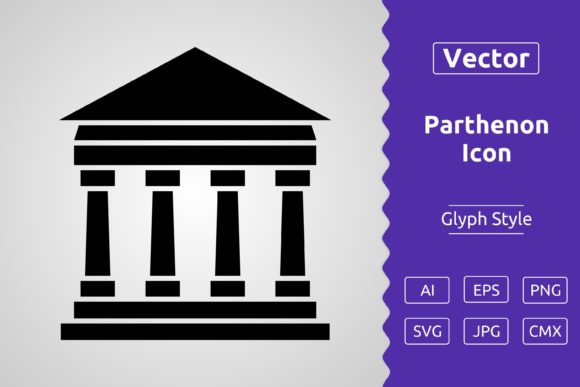
When I opened the Vector Parthenon Glyph Icon for the first time—reviewing it for a client’s new “Wisdom Lab” online course—I felt immediate visual resonance. This isn’t a playful doodle or a flat minimalist shape. It carries architectural weight, symmetry, and quiet confidence. The glyph evokes legacy, intellect, and thoughtful craftsmanship—not flashiness. For brand owners launching premium digital products, editorial newsletters, or coaching programs rooted in strategy or classical learning, this icon signals seriousness without stiffness. It leans into heritage but feels modern in execution—ideal for lifestyle brands, academic-adjacent creators, and small business branding that values substance over speed.
Where It Earns Its Place in Real Campaigns
We embedded Vector Parthenon Glyph Icon across six touchpoints in the Wisdom Lab launch: Instagram carousel headers, Pinterest pin overlays, email banner accents, Canva template dividers, printable workbook covers, and the hero section of the sales page. In each case, it elevated visual hierarchy—not by shouting, but by anchoring. Unlike generic clipart, this graphic design asset functions as a subtle signature: reinforcing credibility while leaving room for copy and human voice to lead. It performed especially well in editorial design and content marketing visuals where audience trust hinges on perceived expertise. On packaging inserts and product labels for physical companion kits, its clean vector structure scaled flawlessly—even at 12mm height on a sticker.
Strengths Across Marketing Channels
- Social media graphics: Stands out in crowded feeds without competing with faces or bold CTAs—works beautifully as a corner accent in Instagram posts and Facebook ads.
- Digital ads & web design: SVG and PNG formats ensure crisp rendering on retina displays; the transparent background makes it drop-in ready for landing pages and email banners.
- Printable design & merchandise: The .AI and .EPS files allowed precise color matching to the brand’s deep indigo palette—critical for branded journals and tote bags.
- Lead magnets & media kits: Used as a recurring motif in PDF workbooks and pitch decks, strengthening recognition across touchpoints.
- Content bundles & Canva templates: Bundled cleanly into editable layers—no pixelation, no lost edges. A true plug-and-play SVG design for non-designers.
What It Does for Your Brand Identity (Beyond Decoration)
This isn’t just another illustration—it’s a strategic visual shorthand. When paired with strong typography and consistent spacing, Vector Parthenon Glyph Icon contributes directly to stronger first impression and more memorable campaign visuals. It subtly reinforces themes of balance, structure, and enduring value—making it powerful for brands building long-term audience trust. In logo design explorations, we tested it as a secondary mark beside wordmarks; its geometry harmonized with both serif and geometric sans serif fonts, though it clashed slightly with overly decorative script fonts. That’s useful intel: it supports professional branding best when contrasted with warmth (e.g., a friendly handwritten subhead) rather than trying to mimic it.
Smart Usage Boundaries: Where to Pause Before Placing
While versatile, Vector Parthenon Glyph Icon isn’t universal. Avoid using it in formal corporate branding where strict minimalism or regulatory neutrality is required—its cultural resonance may feel too specific. It also loses impact in dense information layouts or text-heavy ads, where clarity trumps symbolism. On low-contrast backgrounds (e.g., light gray on off-white), the fine lines can blur—always test black and white usage. And crucially: never scale it below 24px in digital contexts without verifying readability. We caught one instance where it looked like abstract noise in a mobile notification banner—so preview on actual devices before finalizing.
Practical Brand Designer Notes You’ll Actually Use
- Test it against your full brand color palette—not just primary hues, but neutrals and gradients.
- Drop it into real campaign mockups early: website headers, email templates, and social cover images—not just isolated previews.
- Compare spacing and balance next to your headline font: does it breathe, or crowd?
- Check how it pairs with serif (e.g., Playfair), sans serif (e.g., Inter), and display fonts (e.g., Poppins Bold)—it shines with structured typefaces.
- Verify commercial license terms before deploying in client work, paid campaigns, or digital product visuals—it’s licensed for broad commercial use, but always confirm scope.
- Run a side-by-side against competitor visuals: does it differentiate—or blend in?
Why Creative Entrepreneurs Reach for This Glyph Again and Again
In the creative marketplace, most icons fall into two buckets: generic or overly literal. Vector Parthenon Glyph Icon bridges the gap—it’s distinctive enough to build recognition, yet abstract enough to avoid limiting interpretation. Bloggers use it to signal depth in thought leadership posts. Online coaches apply it to course modules about systems thinking. Product creators embed it into packaging design for planner lines or philosophy-themed merch. Its versatility across formats (.SVG, .PNG transparent, .AI, .EPS, .CMX, .JPG) means one purchase serves web design, print production, and digital ads—no reworking needed. That’s efficiency with intention. For small business branding, that’s not just convenience—it’s consistency, scaled.
A Final Thought for Content Creators Building Visual Equity
Every graphic design asset you choose contributes to your visual equity—the cumulative impression your audience holds about your brand. Vector Parthenon Glyph Icon doesn’t chase attention; it earns it through coherence and craft. Whether you’re assembling a design bundle for Etsy, refreshing your Pinterest strategy, or building a cohesive content kit, this glyph adds gravitas without gravity. It’s not filler. It’s framing. And in a world of visual noise, that kind of intentional support is rare—and invaluable.