Premium Mandala: A Designer’s Real-World Embroidery Review
First Impressions: Calm, Cohesive, and Craft-Ready
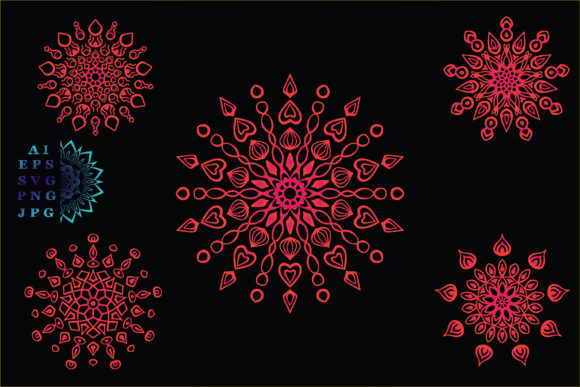
When I opened Premium Mandala, I didn’t see just another circular pattern—I saw rhythm. The symmetry feels intentional, not mechanical; the floral and arabesque motifs flow without crowding, and the outer rings balance detail with breathing room. It’s clearly designed for quiet focus—meditation posters, coloring pages, henna inspiration—but as an embroidery designer, I immediately asked: *Will this translate cleanly into thread?* The answer, after testing it on a linen tea towel and a cotton sweatshirt, is yes—but with thoughtful execution.
Where It Shines: Real Projects That Feel Intentional
I used Premium Mandala to embroider a small-batch run of organic cotton tote bags for a local wellness boutique. At 4.2 inches wide, it sat perfectly centered on the front panel—large enough to read as a statement, small enough to avoid overwhelming the fabric. The design’s layered rings translated beautifully into satin stitch borders and soft fill-stitch florals. Customers responded strongly—not just to the look, but to the *feel*: handmade, grounded, unhurried. That’s the value of a mandala done right.
It also worked surprisingly well as a baby embroidery motif—centered on a muslin swaddle blanket. Because the inner elements aren’t overly dense or micro-detailed, it stitched cleanly even at reduced scale (3.5"), and the open negative space kept the fabric soft and breathable. No puckering. No stabilizer show-through. Just gentle, meaningful texture.
For Etsy sellers and craft fair vendors, Premium Mandala is a quiet workhorse. It’s versatile enough for greeting cards (as a printed + embroidered hybrid), wedding invites (stitched onto vellum overlays), and even minimalist aprons for bakeries or flower shops. Its visual personality leans elegant but approachable—never fussy, never cold. That makes it ideal for small shop branding where authenticity matters more than flash.
Where to Proceed Thoughtfully
Premium Mandala isn’t magic—and assuming it is will cost you time and thread. Here’s where attention pays off:
- Small hoop sizes: Below 4 inches, some inner filigree blurs. Test first on scrap—especially if stitching caps or baby onesies where space is tight.
- Textured or stretchy fabrics: On terry cloth towels or lightweight knits, use cutaway stabilizer and reduce top tension slightly. The design’s balanced density helps, but fabric behavior always wins.
- Dark or heavily printed backgrounds: Since Premium Mandala reads as a single cohesive unit—not a high-contrast graphic—it benefits from thread colors that lift off the surface. Cream on charcoal, pale gold on navy, or sage on black all deepen its meditative tone. Avoid matching thread too closely to dark fabric; you’ll lose definition.
- Frequent-wash items: Think kitchen towels, baby bibs, or kids’ backpacks. Stick to high-quality polyester or rayon threads and lock your trims. The outer ring’s continuous satin stitch holds up well—but don’t push fine inner lines on high-abrasion surfaces without reinforcing.
What It Adds to Your Finished Product—Beyond Aesthetics
A well-executed Premium Mandala does more than decorate. It signals care. When customers see that clean, centered repetition—those intentional pauses between petals and curves—they register craftsmanship, not just customization. That builds trust, especially for personalized gifts (think: embroidered nursery pillows for baby showers) or boutique merchandise where perceived value hinges on subtlety, not saturation.
For digital product sellers, this design works elegantly in printable mockups—its circular format scales cleanly across social thumbnails, listing banners, and PDF previews. As a Graphics asset, it bridges physical and digital workflows seamlessly. And because it’s rooted in Coloring Pages tradition, it carries built-in familiarity. People recognize mandalas as calming, intentional, hand-guided. That association transfers directly to your handmade product—even before the first stitch is made.
Practical Designer Notes You’ll Actually Use
Before committing to a full run—whether for your own craft business or a client’s custom apparel—do these six things:
- Run a test on scrap fabric that matches your final substrate (e.g., fleece for sweatshirts, twill for patches).
- Check thread color contrast in natural light—not just on screen. What looks rich on your monitor may mute on oat-colored linen.
- Review stitch density visually: zoom in on your embroidery software. Are inner flourishes spaced generously enough to avoid thread buildup? If not, simplify one ring manually.
- Confirm hoop size compatibility early. Some versions of mandala designs assume 5x7 hoops; Premium Mandala fits comfortably in 4x4, but verify before digitizing.
- Inspect corners and curves—especially if adapting it for curved surfaces like caps or mugs (via heat-transfer embroidery). Does the symmetry hold when warped?
- Test a black-and-white version. If it reads clearly in monochrome, it’ll hold up across diverse fabric tones and lighting conditions.
Final Thought: Not Just a Design—A Design Decision
Premium Mandala isn’t for every project. It won’t punch through a streetwear hoodie like a bold typographic logo. It won’t dominate a festival banner. But for the designer who values resonance over reach—for the Etsy seller building a slow, considered brand, the small shop owner curating tactile experiences, the embroiderer who treats each stitch as part of a larger intention—it’s a rare find: a machine embroidery design that feels both timeless and quietly current.
Use it where stillness matters. Where attention is the gift. And where “handmade” isn’t a label—it’s the first thing someone feels when their fingers trace the curve of a petal, stitched just so.