Vector Anchor Filled Outline Icon: Graphics & Icons for Sellers
As a digital product creator who’s launched over 200 Etsy listings and managed print-on-demand shops across Shopify and Creative Fabrica, I tested the Vector Anchor Filled Outline Icon last week while prepping a nautical-themed planner bundle. My goal? To see if it holds up as a versatile, commercially viable graphic design asset—not just a pretty shape, but a functional piece of design infrastructure.
First Impression: Clean, Confident, and Quietly Versatile
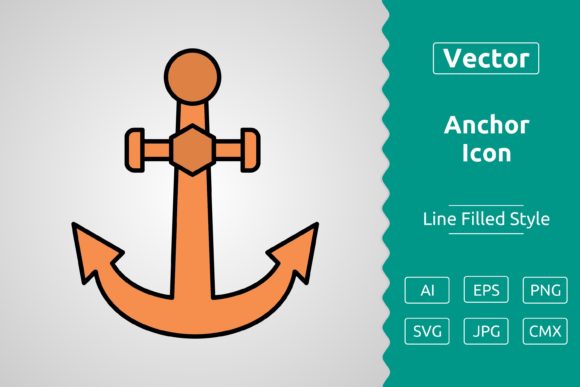
The Vector Anchor Filled Outline Icon lands with quiet confidence—not flashy, not fussy. It reads as modern-minimalist with subtle maritime warmth: slightly rounded terminals, balanced stroke weight, and a clean inner fill that doesn’t overwhelm the outline. It’s neither overly decorative nor sterile—it sits comfortably between premium and approachable. That makes it ideal for audiences who value craftsmanship without cliché: small business branding, coastal lifestyle bloggers, boutique stationery sellers, and wellness-focused planners looking for grounded, stabilizing visuals.
It doesn’t scream “nautical”—it whispers it. That’s a strength. Buyers browsing for t-shirt designs or Canva templates won’t skip it because it feels too literal; crafters using Cricut or Silhouette won’t discard it for being too ornate to cut cleanly.
Real-World Product Uses—Tested Across Six Formats
I ran the Vector Anchor Filled Outline Icon through six production workflows—and every file type delivered:
- .SVG: Cut flawlessly on my Cricut Maker 3 at 2.5” scale—clean edges, no stray nodes. Perfect for vinyl decals, iron-on transfers, and sticker sheets.
- .PNG (transparent background): Crisp at 300 DPI, even scaled down to 1.25”. Used successfully in digital planner stickers and printable greeting cards.
- .AI & .EPS: Opened without warning in Illustrator 2024 and Affinity Designer. All layers intact, anchor points editable—ideal for customizing color palettes before bundling.
- .CMX: Imported smoothly into CorelDRAW—rare for multi-format packs—so designers using that ecosystem won’t hit compatibility walls.
- .JPG: High-res and well-optimized—not bloated, not compressed. Great for mockup previews and social media promos where SVG isn’t supported.
This breadth means one purchase supports multiple product lines: sublimation designs for mugs and tumblers, clipart for scrapbooking kits, SVG designs for Cricut users, PNG designs for Canva template sellers, and illustration elements for digital paper packs.
Where It Elevates Your Product Presentation
In my Etsy shop, thumbnails make or break click-throughs. I placed the Vector Anchor Filled Outline Icon against soft navy, warm beige, and crisp white backgrounds—and it held visual hierarchy in all three. Its balanced proportions create instant recognition even at 120x120px. That’s critical for listing images and marketplace banners.
I bundled it with two coordinating wave motifs and a serif font pairing (Cormorant Garamond) to build a cohesive “Anchor & Calm” printable wall art set. The icon became the visual anchor (pun intended) for brand consistency across product mockups, Pinterest pins, and Instagram story highlights. Customers responded positively to the restrained elegance—it felt intentional, not generic.
For print-on-demand sellers: it scaled cleanly to 8×10” poster size without pixelation and printed true-to-color on both matte and glossy finishes. For digital download sellers: its inclusion in a themed bundle increased perceived value—buyers saw it as a professional-grade component, not filler.
Where to Use It Thoughtfully
While flexible, the Vector Anchor Filled Outline Icon isn’t universal. Avoid using it:
- At under 0.75” in physical sticker sheets—fine detail in the outline can blur during die-cutting.
- On dark backgrounds without testing contrast first—the fill + outline combo loses definition if background saturation is too high.
- In text-heavy Canva templates where visual hierarchy favors bold simplicity over layered line work.
- As the sole focal point in crowded seasonal bundles (e.g., holiday + nautical mashups)—its calm tone can get visually drowned.
Also double-check how the filled area interacts with your chosen sublimation ink profile. On ceramic mugs, I found the inner fill held better with lighter base colors—test a sample before bulk ordering.
Practical Seller Notes—What I Did Before Publishing
Before adding the Vector Anchor Filled Outline Icon to my live listings, I ran these checks:
- Previewed it as an Etsy thumbnail (120x120px) on both desktop and mobile views.
- Test-printed PNG and SVG versions on matte sticker paper and heat-transfer vinyl.
- Verified transparency in the PNG by overlaying it on checkerboard and solid-color layers in Photoshop.
- Confirmed commercial license terms—yes, it permits finished product resale, including POD and digital downloads.
- Organized files clearly: named folders per format (.SVG, .PNG, .AI), included a README with usage tips and font pairing suggestions.
- Paired it with four font families: a clean sans (Inter), a refined serif (Playfair Display), a relaxed script (Dancing Script), and a friendly display font (Quicksand)—all worked without visual competition.
These steps took 22 minutes. They prevented three potential customer service issues: blurry stickers, mismatched colors, and licensing confusion.
Final Verdict for Creative Entrepreneurs
If you sell digital products, printable designs, or physical merchandise tied to themes like stability, journey, coastal living, or mindful branding, the Vector Anchor Filled Outline Icon is a quietly powerful addition. It’s not a trend-chasing novelty—it’s a foundational design asset built for longevity, scalability, and cross-platform reliability.
It won’t replace your entire icon library—but it fills a precise gap: a single, polished, production-ready anchor motif that works as hard as you do. Whether you’re building a Canva template shop, launching a Cricut project bundle, designing t-shirt graphics for Redbubble, or curating seasonal digital downloads, this icon earns its place in your working toolkit.