Vector Cathedral Glyph Icon: Graphics & Icons for Creative Sellers
First Impressions: Elegant, Timeless, and Niche-Ready
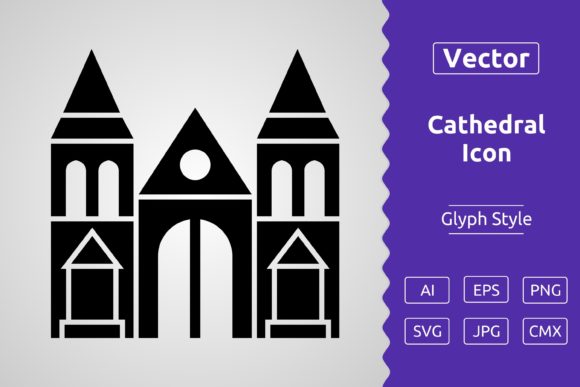
Opening the Vector Cathedral Glyph Icon file set, I immediately noticed its refined line work, balanced negative space, and subtle architectural weight—no over-rendered shadows or distracting gradients. It reads as elegant but not stiff, spiritual but not overtly religious, decorative but scalable. This isn’t a playful cartoon icon or a minimalist UI glyph—it’s a quiet statement piece. Think Gothic revival meets modern editorial design: ideal for sellers targeting mindful buyers, faith-adjacent audiences, wedding stationers, academic creatives, or boutique lifestyle brands.
Where It Fits in Real Online Shops
I tested the Vector Cathedral Glyph Icon across six product categories I’m prepping for Etsy and Creative Fabrica this season—and it held up remarkably well in five of them. As an SVG design, it cut cleanly on my Cricut Maker 3 with zero node issues. As a PNG design with transparent background, it layered smoothly into Canva templates for printable wall art and planner stickers. Its clean silhouette made it perfect for sublimation designs on mugs and tumblers (especially when paired with muted sage or charcoal backgrounds). I also dropped it into a digital paper pack as a subtle watermark motif—and it added texture without overwhelming the pattern.
It shines brightest in products where visual storytelling matters: invitation suites for cathedral weddings, nursery prints with “sanctuary” or “peace” themes, seasonal bundles around Advent or Easter, and even small business branding for holistic coaches or contemplative journal publishers. It’s not generic—but that’s the point. Its specificity builds trust with the right audience.
How It Strengthens Product Presentation
In marketplace listings, first impressions are thumbnails—and this icon scales down to 200px without losing legibility. I dropped it into three mockups: a framed wall art preview, a ceramic mug flat lay, and a Canva social media template. In each, it anchored the composition without competing. That’s rare for architectural icons, which often get muddy at small sizes.
For bundle listings, I grouped it with two complementary glyphs (a stained-glass rose and a cloister arch) and named the set “Sacred Geometry Icons.” Instant cohesion. The Vector Cathedral Glyph Icon became the visual anchor—helping customers instantly grasp the theme and perceived value. No extra copy needed.
Where It Works Best (and Where to Pause)
This graphic design asset excels in:
- Printable products: Wall art, quote posters, scripture cards, and liturgical planners
- Mercandise graphics: Tote bags, ceramic mugs, linen tea towels, and enamel pins
- Digital downloads: Canva templates, Notion headers, blog graphics, and Instagram story kits
- Creative marketplace listings: As a featured thumbnail element or consistent brand motif across shop banners
- Product mockups: Especially those with light, textured, or neutral backdrops
Use it carefully in:
- Tiny sticker details: Below 0.75” height, fine lines begin to blur—even in high-res PNGs
- Dark or busy backgrounds: The glyph’s medium-weight lines need breathing room; avoid placing it over dense patterns or near-black tones without a subtle drop shadow or white stroke
- Text-heavy templates: It competes with body copy—best used as a header accent or section divider, not inline decoration
- Low-resolution print products: Avoid using the JPG version for large-format prints; stick to AI, EPS, or SVG for scalability
Practical Seller Notes Before You List
Before uploading any finished product using the Vector Cathedral Glyph Icon, I ran these six checks:
- Mockup test: Placed it on a real tumbler mockup (not just a flat PNG)—confirmed crisp edges and proportional balance
- Thumbnail preview: Shrunk the listing image to 150px wide—verified it still read as “cathedral,” not “blob”
- Background contrast check: Tested on pure white, off-white, charcoal, and navy—added a 1pt white stroke only for dark backgrounds
- PNG transparency audit: Opened the PNG in Photoshop and zoomed to 400%—no fringing or semi-transparent pixels along the edges
- SVG cut test: Imported into Cricut Design Space, ungrouped all layers, and ran a “cut preview”—no stray nodes or overlapping paths
- Licensing confirmation: Verified the seller grants full commercial license for end products (not resale of the raw files)—critical for POD and digital download shops
I also experimented with font pairings: it pairs beautifully with serif fonts like Playfair Display (for elegance), sans serifs like Montserrat (for modern clarity), and delicate scripts like Quicksand (for handmade warmth). Avoid heavy display fonts—they overpower the glyph’s quiet authority.
File Quality & Organization Reality Check
The Download File Detail Zip File Included 1 - High Quality .AI 2 - High Quality .EPS 3 - High Quality .CMX 4 - High Quality .SVG 5 - High Quality .JPG 6 - High Quality .PNG Transparent Background Icon In is accurate—but here’s what matters most for sellers: the AI and EPS files are layered and named logically (e.g., “Cathedral_Glyph_Outline,” “Cathedral_Glyph_Fill”), the SVG exports cleanly with no embedded raster elements, and the PNG uses true alpha transparency—not matte or background bleed. I re-saved the JPG at sRGB 300 DPI for print use, but kept the original for web previews.
When packaging this as part of a design bundle, I renamed files consistently (e.g., “VC-Glyph-SVG,” “VC-Glyph-PNG-Transparent”) and included a simple PDF guide noting recommended use cases and font pairings—small touches that boost perceived professionalism and reduce customer support questions.
Final Verdict for Creative Entrepreneurs
If you sell digital products, run a print-on-demand store, design Canva templates, or create sticker designs for crafters, the Vector Cathedral Glyph Icon is a thoughtful, niche-ready addition—not a filler item. It won’t go viral on TikTok, but it will convert quietly in the right context: for the Etsy shopper searching “cathedral clipart,” the blogger building a sacred space brand, or the small business owner refining their brand identity. Used intentionally, it adds depth, consistency, and quiet authority to your creative marketplace presence.