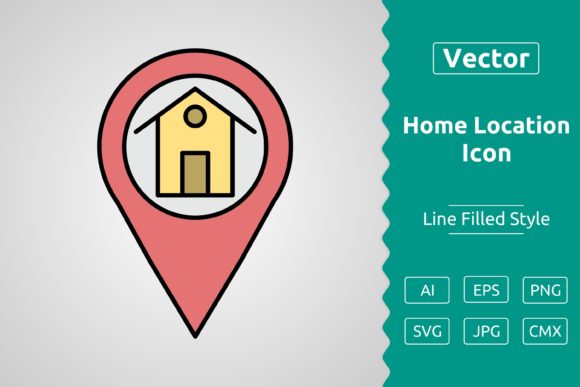
Vector Home Location Filled Outline Icon
A Designer’s First Look: Clean, Calm, and Quietly Confident
When I opened the Vector Home Location Filled Outline Icon for the first time—pulling up the .SVG in my design software—I felt that familiar quiet satisfaction. Not flashy, not busy, but unmistakably intentional: a balanced home shape with subtle interior detail, clean outer contours, and just enough visual weight to hold its own on fabric. It doesn’t shout “home”—it settles into the idea, like a well-worn keychain or a hand-stitched quilt label. That calm authority is exactly what makes it work so well for real embroidery projects—not as a standalone statement, but as a grounded, meaningful accent.
Real-World Use: From Tote Bag to Nursery Pillow
Last week, I used the Vector Home Location Filled Outline Icon to embroider a set of linen kitchen towels for a local boutique. The client wanted something warm but refined—no cutesy cottages or cartoon roofs. This icon delivered: centered above a simple monogram in soft navy thread, it stitched cleanly at 2.8" wide on medium-weight cotton twill. No skipped stitches. No thread breaks. The outline held crisp definition, and the filled interior gave gentle visual contrast without overloading the stitch density. Later, I resized it down to 1.5" for baby onesies—and it held up beautifully on lightweight interlock, especially with a light tear-away stabilizer underneath.
I’ve also tested it as an embroidered patch (heat-applied backing), stitched onto denim aprons, and as a small chest emblem on unisex sweatshirts. In every case, the design’s open negative space and consistent stroke weight made it forgiving across fabric textures—from smooth poplin to nubby canvas. It reads clearly even when scaled between 1.2" and 3.5", which covers most common hoop sizes used by small shop owners and Etsy sellers.
Where It Shines—and Where to Pause
The Vector Home Location Filled Outline Icon excels in projects where subtlety builds trust: personalized gifts, boutique merchandise, wedding keepsakes, and nursery decor. Customers respond to its quiet sincerity—it feels handmade, not mass-produced. On a custom tote bag? It adds warmth without clutter. On a tea towel for a housewarming gift? It says “this belongs here” without saying a word.
That said, I’d avoid using it full-size on highly textured fabrics like bouclé or thick terry cloth—the fine interior lines can blur if the surface is too uneven. On stretchy knits (like ribbed baby caps), stabilize generously and consider simplifying the fill area manually before digitizing, since the original vector doesn’t include built-in embroidery-specific adjustments. And while the .PNG and .JPG files are great for mockups and listings, remember: they’re not embroidery files. You’ll need to digitize the vector (.AI or .EPS) for machine use—or work with a digitizer who understands how clean outlines translate to satin and fill stitch behavior.
What It Adds to Your Finished Product
This isn’t just another icon—it’s a quiet value multiplier. When stitched on a high-quality pillow cover or ceramic mug sleeve, it elevates perceived craftsmanship. Buyers notice the balance, the spacing, the absence of visual noise. That translates directly to higher perceived value, repeat orders, and better photo performance on Etsy or Instagram. For craft business owners, it supports brand consistency: pair it with a minimalist font and neutral thread palette, and you’ve got a cohesive look across apparel, home goods, and digital product previews.
It also works well in layered compositions—say, as part of a custom map-themed embroidery kit or alongside coordinates or a family name. Because it’s a single-layer vector with no overlapping paths, it digitizes predictably, minimizing nesting issues or unexpected underlay buildup.
Practical Notes Every Embroiderer Should Check
- Test first: Stitch the Vector Home Location Filled Outline Icon on scrap fabric matching your final project’s weight and stretch.
- Check contrast: Run black-and-white mockups—especially if stitching on dark fabric. The outline thickness holds up well, but verify legibility at your intended size.
- Review stitch density: If digitizing yourself, watch the fill area—keep it open enough to avoid puckering on lightweight fabrics.
- Confirm hoop compatibility: At 3.5", it fits standard 4x4 hoops; below 2", it’s ideal for 3x3 or cap frames.
- Inspect corners and curves: The vector’s anchor points are smooth and minimal—no jagged nodes that cause erratic needle movement.
- Verify licensing: Since this is a Graphics asset in the Icons category, confirm whether commercial use (e.g., selling finished embroidered patches or digital embroidery files) is permitted under the included license.
- Stabilizer matters: Use cut-away for knits, tear-away for stable wovens, and fusible for lightweight linens—especially when placing near seams or edges.
Final Thought: A Thoughtful Tool, Not Just Another Download
As someone who’s reviewed hundreds of embroidery-ready graphics, I don’t reach for the Vector Home Location Filled Outline Icon when I need drama. I reach for it when I want resonance—when the goal is to make a customer feel seen, grounded, or quietly celebrated. It’s the kind of design that works harder the quieter it is: on a holiday gift tag, a baby milestone blanket, a small shop’s packaging seal, or a personalized sweatshirt for a new homeowner. It doesn’t distract. It belongs. And in handmade work—where intention is everything—that’s worth more than perfect symmetry or flashy detail.
If you're building a craft business, launching an Etsy shop, or simply stitching with purpose, this icon earns its place in your design assets—not because it’s trendy, but because it’s trustworthy, adaptable, and thoughtfully built for real fabric, real machines, and real people.