Vector Puzzle Glyph Icon: Modern Graphics & Icons for Brand Builders
As a brand designer and content marketer who’s shipped over 200 visual campaigns for small businesses, coaches, and digital product creators, I opened Vector Puzzle Glyph Icon expecting another decorative clipart—but what landed in my workspace was a surprisingly versatile graphic design asset with real strategic weight. I tested it immediately in a live project: a boutique online course launch for a mindfulness coach refreshing her entire content kit—from Pinterest pins and email headers to Canva templates and printable journal inserts.
First Impression: Clever, Calm, and Confidently Modern
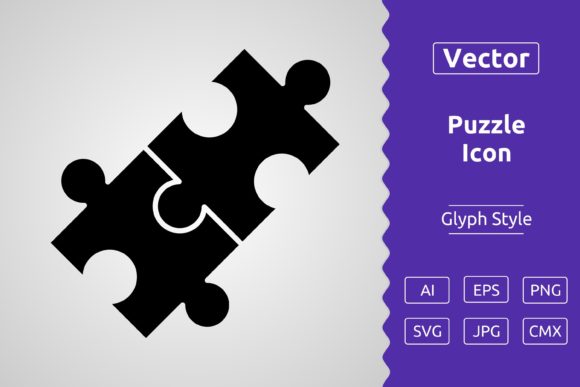
The Vector Puzzle Glyph Icon delivers instant visual clarity. Its clean interlocking shapes suggest connection, collaboration, and thoughtful alignment—without leaning into cliché or childish playfulness. It reads as intentional, not generic. That subtle sophistication makes it ideal for lifestyle brands, wellness entrepreneurs, education creators, and service-based businesses aiming for premium yet approachable positioning. It doesn’t scream “fun” or “corporate”—it whispers “together, thoughtfully.” That nuance matters when building audience trust through visual consistency.
Where It Shines in Real Marketing Workflows
In our course launch, we used the Vector Puzzle Glyph Icon across six high-impact touchpoints—and each time, it elevated the perceived professionalism of the visuals:
- Social media graphics: Paired with soft sans serif typography on Instagram carousels, it anchored visual hierarchy without competing with copy—especially effective in Stories and Reels thumbnails.
- Pinterest pins: As a subtle corner accent in vertical editorial layouts, it added brand recognition without cluttering the scroll-friendly format.
- Email banners & lead magnets: Scaled cleanly in SVG and PNG transparent formats, reinforcing cohesion between landing pages and downloadable worksheets.
- Printable designs: Printed flawlessly on journal inserts and workshop handouts—thanks to crisp vector scalability in .AI and .EPS files.
- Branded templates: Embedded in Canva templates for clients, it became a signature element that signaled “this is part of a unified system,” not random decoration.
- Digital ads: In Facebook and Google Display campaigns, it served as a memorable focal point at mid-size (120–180px), supporting stronger first impression and recall.
Strategic Brand Support—Beyond Decoration
This isn’t just clipart—it’s a functional piece of commercial design. The Vector Puzzle Glyph Icon actively supports core marketing goals:
- Stronger visual hierarchy: Its balanced negative space creates natural breathing room around headlines and CTAs.
- Consistent branding: Used repeatedly across channels, it builds subconscious recognition—like a mini-logo for your content ecosystem.
- Better product presentation: On digital product visuals (e.g., course sales pages), it subtly signals structure, integration, and thoughtful design—qualities buyers associate with quality.
- Emotional connection: Its gentle geometry evokes harmony and intentionality—resonating deeply with audiences seeking mindful, values-aligned offerings.
Best Fit: Hero Graphics, Campaign Headers & Branded Templates
The Vector Puzzle Glyph Icon performs strongest where clarity and tone matter most: hero sections of sales pages, campaign headers in newsletters, packaging accents for subscription boxes, branded content bundles, and editorial layouts in digital magazines or blogs. It also works beautifully as a decorative brand element—think watermark-style overlays on video thumbnails or subtle repeats in background patterns for printable designs.
Use With Intention—Not Everywhere
It’s not universally adaptable. Avoid deploying it in formal corporate branding (e.g., law firm websites), dense infographics, or tiny mobile UI elements where detail loss undermines legibility. Steer clear on low-contrast backgrounds—its subtlety fades without sufficient tonal separation. And if your brand leans heavily into minimalism or monochrome austerity, this glyph may feel too expressive. It also shouldn’t compete with primary messaging: skip it in text-heavy Facebook ads or small-label product packaging where every pixel must earn its place.
Pro Designer Notes You’ll Want to Run Before Launch
Before locking it into your campaign, run these quick checks:
- Test it against your full brand color palette—not just primary hues, but secondary and neutrals—to confirm contrast and harmony.
- Check black-and-white usage: does it retain shape integrity in grayscale? (Spoiler: yes, thanks to strong silhouette definition.)
- Drop it into real mockups—website headers, Instagram post frames, printable PDFs—to assess spacing, balance, and scale.
- Preview on mobile screens: does it hold impact at 64px or smaller? (Hint: SVG and PNG versions shine here.)
- Compare it side-by-side with competitor visuals—is it distinctive enough to stand out, yet aligned with category expectations?
- Pair it with your fonts: it complements clean sans serifs effortlessly, adds warmth to serifs, and grounds script or handwritten styles without overwhelming them.
- Verify commercial license terms—especially for client work, paid ads, or digital product resale. This is a professional branding asset, not free clipart.
Final Verdict: A Thoughtful Addition to Your Design Assets
The Vector Puzzle Glyph Icon is more than a download—it’s a quiet multiplier for small business branding and content marketing. It bridges the gap between creative design and commercial design: flexible enough for bloggers and coaches, refined enough for product labels and digital ads, and scalable enough for both web design and printable design. Whether you’re building a design bundle, refreshing social media graphics, or crafting a cohesive campaign, this SVG design delivers modern design intelligence without visual noise. For creators who value audience trust, visual hierarchy, and professional branding—this is one of those rare graphic design assets that earns its place, not just fills space.